








TCA Cross


Providers
TCA CROSS stands for Trichloroacetic Acid Chemical Reconstruction of Skin Scars, a minimally invasive dermatological chemical peel specifically designed to improve the appearance of acne scars, particularly deep, narrow ones known as ice pick scars. This technique involves the careful application of highly concentrated trichloroacetic acid directly into the scars, causing a localized chemical reaction. This chemical peel promotes collagen production and skin remodeling, treating acne scars via elevation of the scarred area. By focusing TCA CROSS strictly on the scar tissue, this minimizes the risk to surrounding healthy skin, making it a targeted chemical peel treatment for those seeking significant improvements in their appearance.
What are the Benefits
of TCA CROSS?
TCA CROSS chemical peel is a highly effective treatment for certain types of acne scars, particularly deep and narrow ice pick scars and boxcar scars. Its targeted approach allows for significant improvements in texture and appearance without extensive downtime or damage to surrounding skin.

Precision Treatment
TCA CROSS involves the application of deep chemical peels directly to the target area, minimizing exposure to surrounding healthy skin and enhancing the accuracy of the acne scar treatments.
Collagen Induction
The chemical peel procedure leads to filling in of acne scars from within by stimulating collagen production, which is essential for rejuvenation.
Minimal Downtime
Compared to more invasive peels, TCA CROSS generally requires minimal recovery time, allowing patients to return to normal activities after the chemical peel treatment.
Improved Texture
Patients typically notice a smoother texture and a more even skin tone following chemical peels like TCA.
High Efficacy
Many patients see significant improvements after just a few peel sessions, making this peels treatment an efficient option for acne scar treatment.
Cost-Effective
The treatment is often more affordable than other scar removal technologies, such as laser therapy, especially when considering the effectiveness in targeting deeper scars.
Long-Lasting Results
Once the desired outcome is achieved, the improvements are generally long-lasting with proper skin care and protection.
What Is the Recovery Time for TCA CROSS?
The recovery time for TCA CROSS chemical peels is relatively brief compared to other more invasive treatments and peels, but it varies depending on skin types, the extent of the treatment, and the concentration of TCA used. Generally, patients can expect a recovery period where the skin heals and rejuvenates over the course of several days to a few weeks. Here's what you can typically expect during the recovery timeline:
Immediate Post-Treatment
Immediately after treatment, the treated areas will likely appear red and may feel a bit swollen. Small crusts or scabs can form where the peel was applied.
Early Healing Phase
During this phase, the initial redness starts to subside, and the scabs will begin to dry out. It's crucial to avoid picking at the scabs to prevent scarring.
Mid-Recovery Phase
By the second week, most of the scabs have usually fallen off naturally. The skin beneath may appear pink and tender as new, healthier skin forms from the peel.
Continued Healing
The new skin continues to heal and gradually blends with the surrounding areas. Any residual pinkness will begin to fade during this time.
Long-Term Healing
Collagen remodeling continues for months after the chemical peel, further smoothing and improving the skin’s texture.
During recovery, it is important to follow all aftercare instructions provided by your dermatologist, including avoiding direct sun exposure and using recommended products to support healing and prevent peels complications.
What Is the Recovery Time for TCA CROSS?
The recovery time for TCA CROSS chemical peels is relatively brief compared to other more invasive treatments and peels, but it varies depending on skin types, the extent of the treatment, and the concentration of TCA used. Generally, patients can expect a recovery period where the skin heals and rejuvenates over the course of several days to a few weeks. Here's what you can typically expect during the recovery timeline:
Preparation
The skin is cleansed to remove any oils, and an antiseptic is applied to reduce the risk of infection. The area is then dried completely to ensure the peels adheres properly.
Application
Using a fine-tipped instrument, such as a toothpick or a small, sharp applicator, the dermatologist carefully applies a small amount of high concentration TCA directly into each scar. Precision is key to confine the peel to the scarred tissue only.
Neutralization
Unlike some other chemical peels, TCA self-neutralizes, so no neutralizing solution is applied. The reaction stops once the desired depth is reached.
Immediate Aftercare
The treated areas might frost or turn white, which indicates that the acid has penetrated the skin. This frost typically subsides within a few hours.
Monitoring
The dermatologist will monitor the reaction and the treatment response, adjusting the application if necessary during subsequent sessions.



Is this Treatment
Right for Me?
Deciding whether TCA is the right peel for your acne scars involves several considerations. This peel is particularly effective for deep, narrow scars such as ice pick scars or boxcar scars, and may not be as effective for rolling scars or widespread shallow scarring. Ideal candidates are those who are in good health, have stable skin without active acne, and possess realistic expectations about the results. Skin types and color also play a role; individuals with darker skin tones may be more prone to post-peel hyperpigmentation and should discuss potential risks with their dermatologist. It is essential to consult with a qualified dermatologist who can assess your specific scars, skin types, and medical history to determine if TCA CROSS peels are suitable for you. This personalized approach ensures that you receive the most appropriate and effective chemical peels for your skin concerns.
Frequently Asked Questions
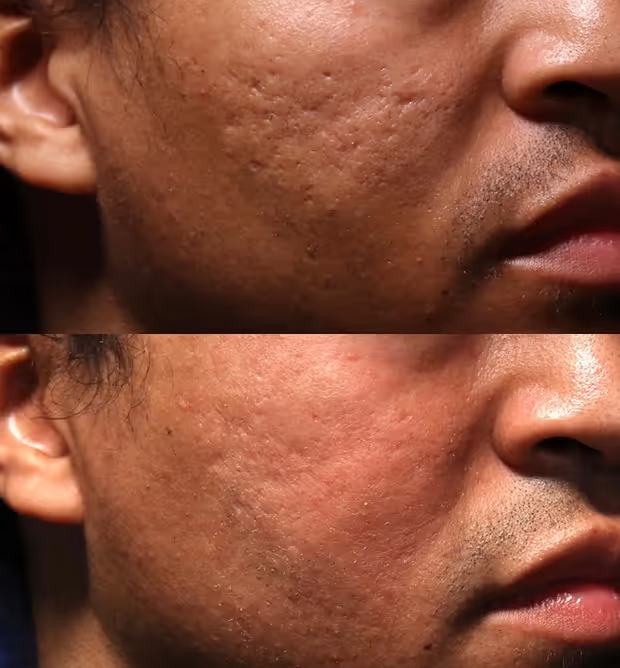
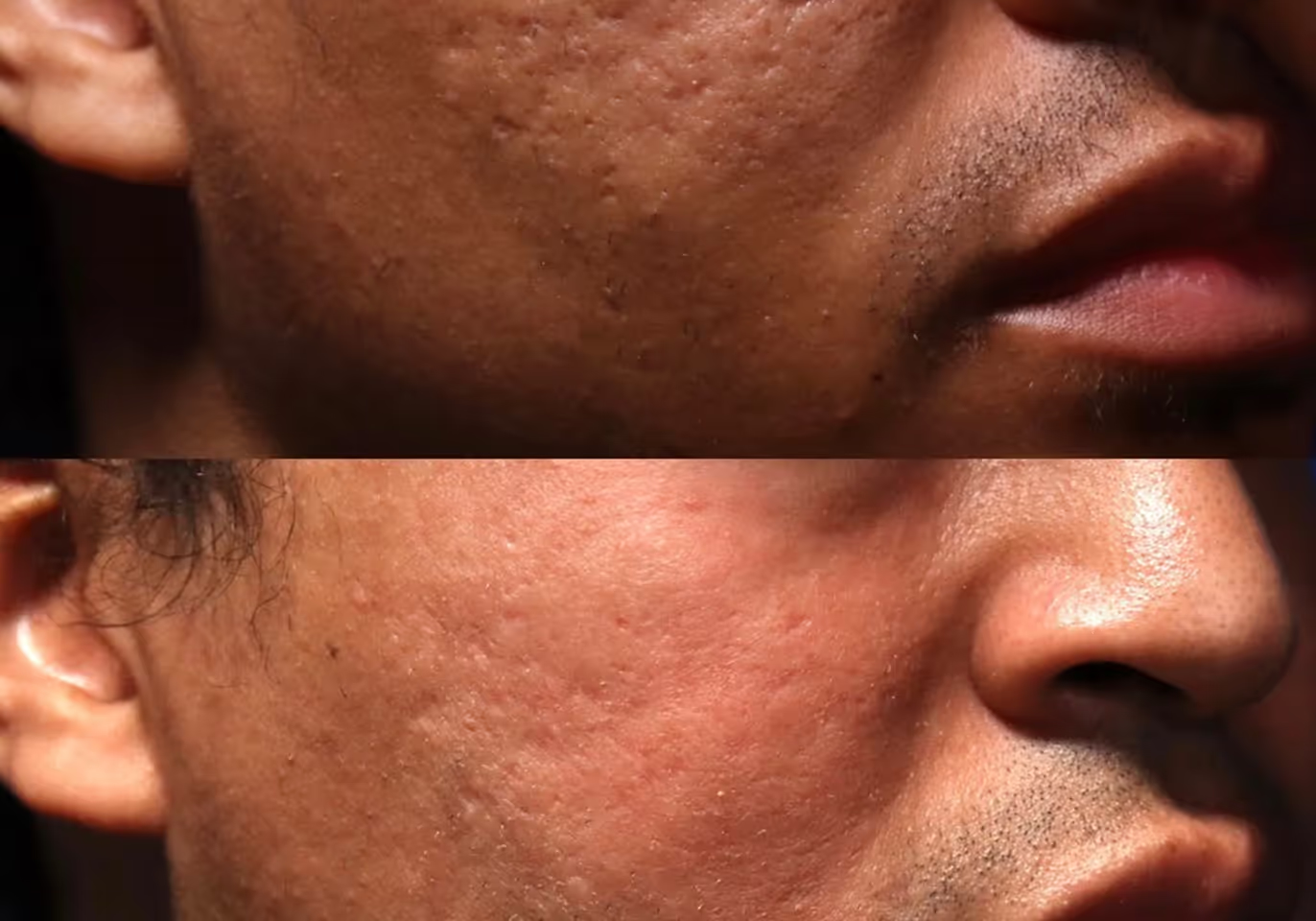
TCA CROSS chemical reconstruction technique for treating ice-pick and depressed acne scars with excellent long-term results.
How does TCA CROSS work and why is it effective for scars?
TCA CROSS works by applying concentrated trichloroacetic acid directly into depressed scars, causing controlled chemical destruction of scar tissue. The acid penetrates deep into the scar, denaturing collagen and triggering the body's healing response. As the damaged tissue resolves and the wound heals, new collagen is deposited, filling the previously depressed scar. The repeated injury stimulates progressive collagen remodeling. TCA CROSS is particularly effective for ice-pick scars because the concentrated acid can reach deep into these narrow scars. The technique allows treatment of individual scars without affecting surrounding skin. Results improve gradually over months as collagen remodels. Repeated treatments at appropriate intervals (typically 2-3 months apart) provide cumulative improvement. The mechanism of action—permanent removal of scarred tissue—means results persist long-term. Dr. Hazany's expertise with TCA CROSS technique produces excellent outcomes.
Is TCA CROSS painful and what is the procedure like?
TCA CROSS is minimally painful due to the small amount of acid applied to individual scars. Topical or local anesthesia can be applied beforehand to minimize any discomfort. The procedure involves using a wooden applicator to carefully deposit TCA solution into each scar. A short chemical burn develops as the acid works on scar tissue. Most patients experience mild stinging or burning sensation during application. The procedure is quick, typically taking 15-30 minutes depending on the number of scars. Neutralization and cooling of the acid prevents excessive damage to surrounding skin. Post-procedure discomfort is usually minimal to mild. Some patients describe the sensation as stinging or warm. Most patients tolerate the procedure well and schedule multiple sessions. Dr. Hazany's careful technique minimizes discomfort while maximizing treatment effect.
What is the recovery period after TCA CROSS?
Recovery after TCA CROSS is relatively quick with minimal downtime. Temporary crusting forms over treated scars within hours of treatment, typically lasting 3-7 days. The crusted area protects healing tissue beneath. Redness around treated scars persists for several days to weeks. Swelling is usually minimal. Many patients can return to work the same day or next day. Strenuous exercise should be avoided for 2-3 days to prevent excessive sweating on treated areas. Sun protection is critical during healing to prevent postinflammatory hyperpigmentation. Keeping treated areas clean and moisturized supports healing. The crusts should be left in place rather than picked off. Post-treatment restrictions are minimal compared to other scar treatments. Dr. Hazany provides detailed aftercare instructions supporting optimal healing.
How many TCA CROSS treatments are typically needed?
Most patients require multiple TCA CROSS treatments to achieve satisfactory scar improvement. Treatment number depends on scar severity, depth, and individual response. Mild scarring may improve with 2-3 treatments spaced 2-3 months apart. Moderate scarring typically requires 4-6 treatments. Severe scarring may require 6-8 or more treatments. Each treatment produces cumulative improvement as the body remodels tissue over months. Spacing treatments allows proper healing between sessions. Too-frequent treatments prevent adequate healing and tissue remodeling. Most patients begin seeing noticeable improvement after 2-3 treatments. By 4-6 treatments, patients typically have achieved 50-75% improvement. Some improvement continues between and after treatments for several months. Dr. Hazany assesses progress at each visit and recommends appropriate treatment intervals.
Can TCA CROSS be combined with other scar treatments?
TCA CROSS can be combined with other scar treatments for enhanced results. Combining with laser treatments on different visits addresses scars from multiple angles. Subcision can be performed alongside TCA CROSS to release tethering while TCA addresses surface scars. Microneedling can follow TCA CROSS healing to further stimulate collagen. Dermal fillers can be used between TCA CROSS treatments to temporarily improve appearance during the remodeling period. The order and timing of combination treatments matter for optimal results. Some treatments must be spaced apart to avoid excessive skin injury. Dr. Hazany plans comprehensive combination approaches tailored to individual scar patterns. The synergistic effect of combination treatments often produces superior results compared to single modalities.
What results can be expected from TCA CROSS treatment?
TCA CROSS produces substantial improvement in ice-pick and depressed acne scars with realistic expectations. Mild scars often improve by 60-80% with appropriate treatment. Moderate scars typically improve 50-70%. Even severe scarring can achieve 40-60% improvement with persistent treatment. Results continue improving months after the final treatment as collagen remodels. Early improvement appears within weeks but continues developing for 6-12 months after treatment. Most patients are very satisfied with results given the often dramatic improvement from severe scarring. Perfect scar elimination is rarely achieved, but functional improvement in appearance is typically significant. Results persist long-term since the treatment removes scar tissue rather than suppressing inflammation. Patient satisfaction with TCA CROSS is typically high due to the lasting improvement. Dr. Hazany's experience achieves results often exceeding patient expectations.
Rediscover Skin You
Feel Confident In
Take the next step toward clear, healthy, and radiant skin with care tailored to you. Your transformation starts with a single consultation.