








Hair Removal

Permanently Remove Unwanted Hair
One of the most important reasons why people undergo laser hair reduction is to rid the body of unsightly, unpleasant, or uncomfortable hair. If you are a candidate, laser hair removal can be used to remove unwanted hair from virtually any area of your body.
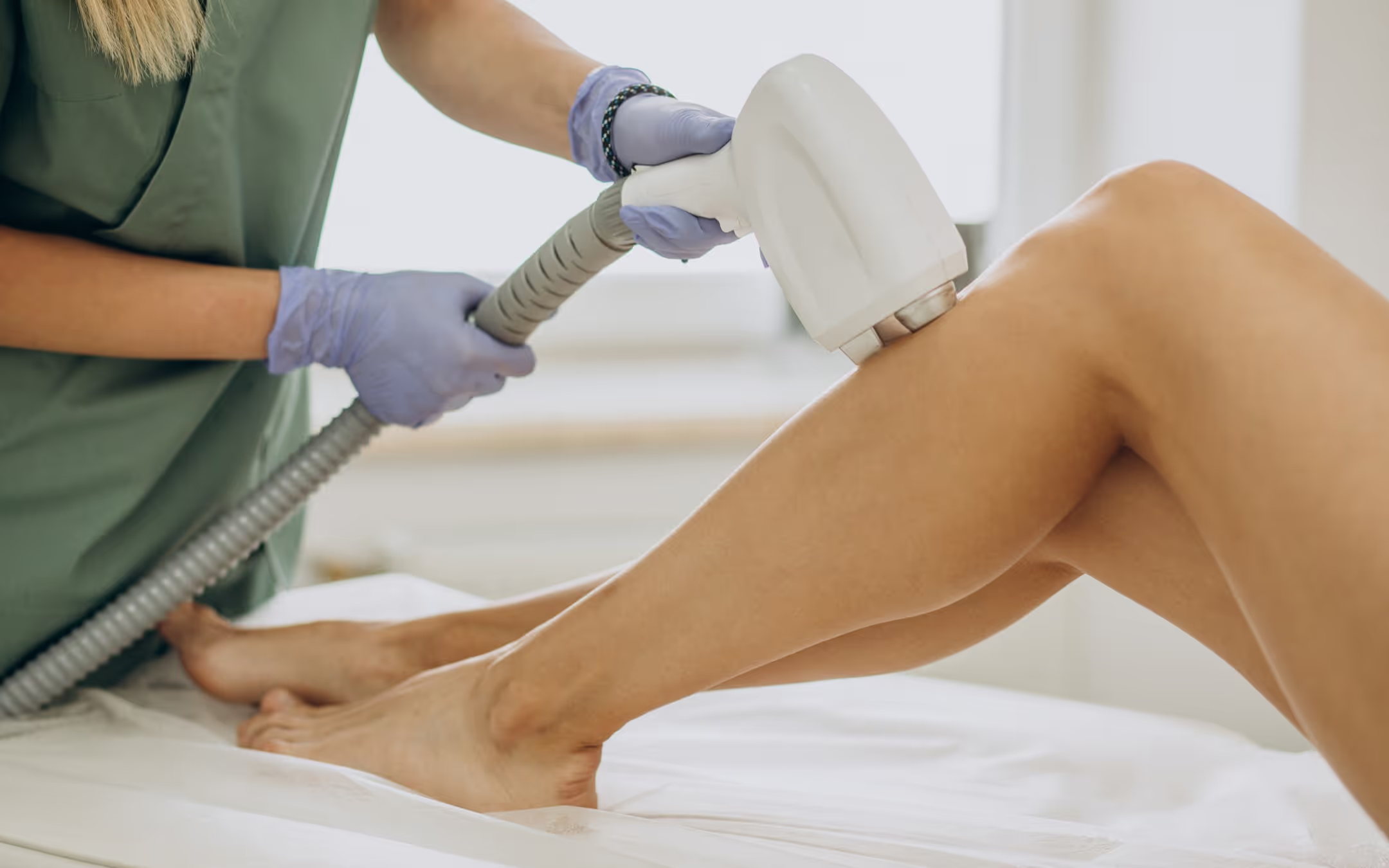
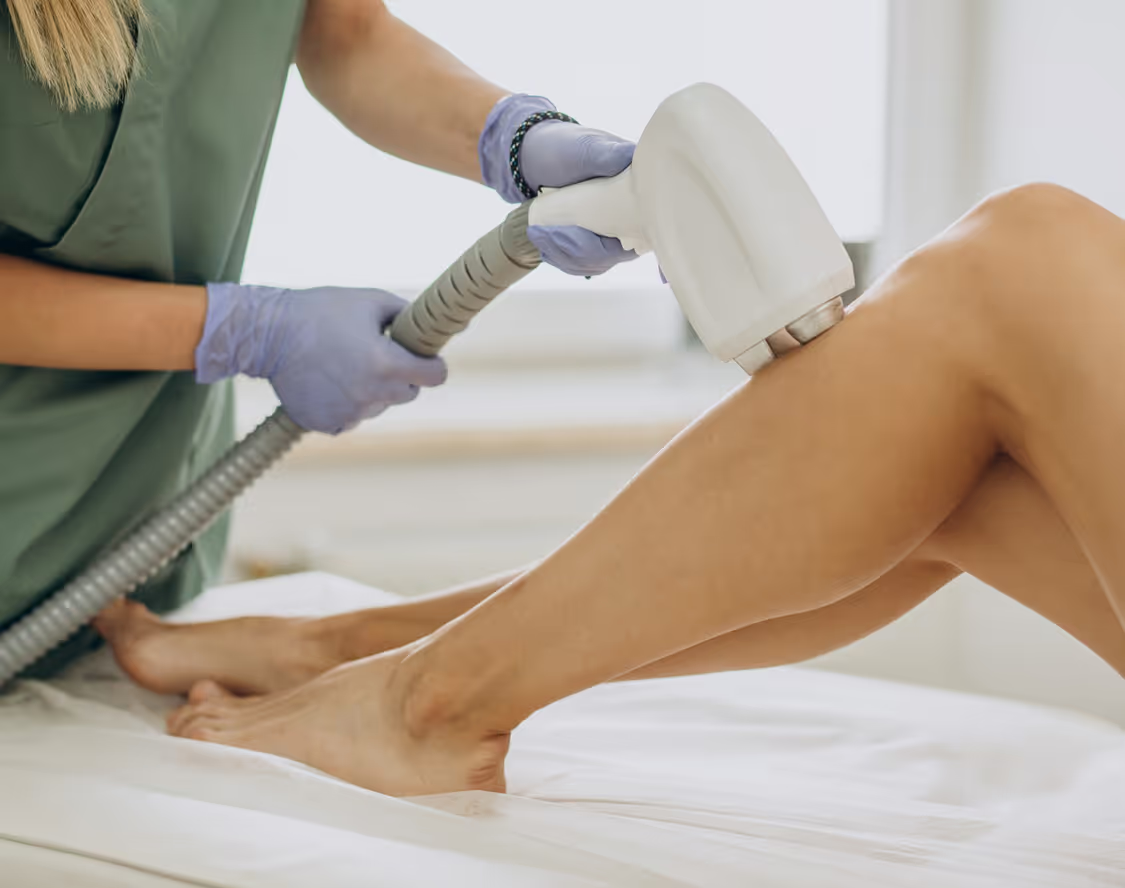
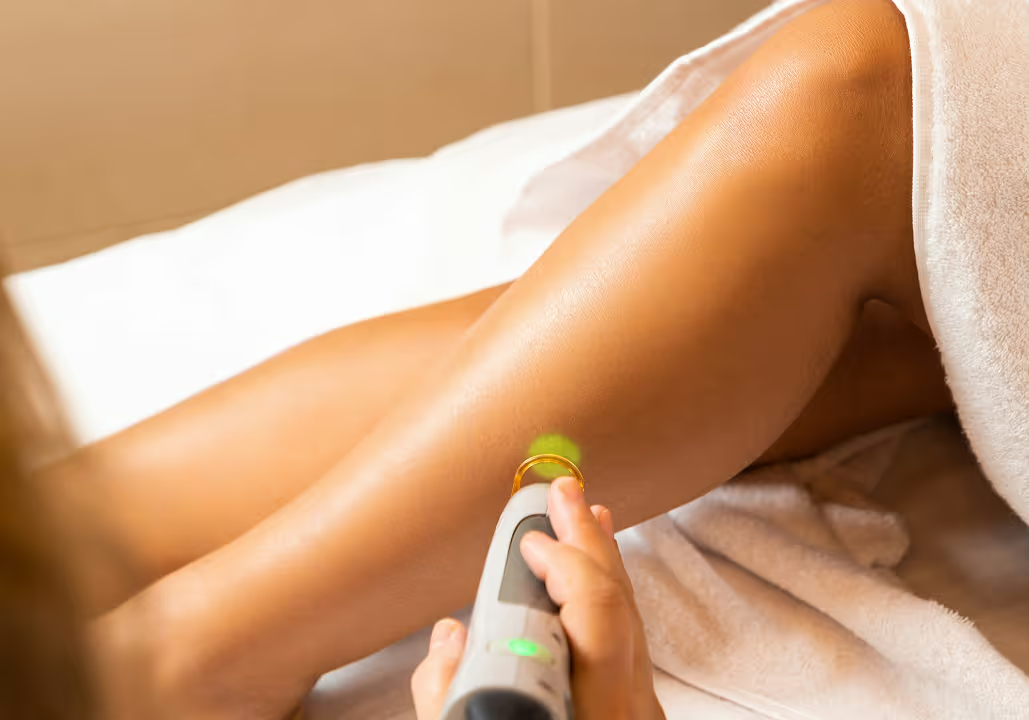
Laser hair removal is a very popular treatment that is used to remove hair from all parts of the body, from the head, neck, shoulders, arms, legs and feet. It works by destroying the hair follicles and skimming the hair off the tip of each follicle, as you do when you shave. Before you receive laser hair removal, it is important to minimize your exposure to the sun and apply sunscreen.
Traditionally, laser hair removal only works for women of certain skin tones, but using an intense pulsating light (IPL) laser that uses multiple wavelengths is highly effective for achieving the best results. Although the technology has been commercially available for women of all colors for several years, the process began to gain popularity in the late 1990s and early 2000s with the introduction of the first commercial laser treatment for men. Today we offer today's IPL and hair removal lasers in Los Angeles, California, as well as other parts of California.

Is Laser Hair Removal Right
for You?
Laser hair removal works for virtually all skin types. If you are looking for a permanent solution to unwanted hairs, contact Dr. Hazany. Our team of highly trained professionals provides quick and easy hair removal sessions that create permanent results. Do not hesitate to contact us and schedule your consultation today.
Although not technically containing a laser, IPL-based hair removal options are often referred to as "laser hair removal." IPL hair removal techniques have proven to be quicker, be less painful and have longer-lasting results than any other alternatives such as waxing and electrolysis. IPL hair removal works by use of exon flash lamps that emit full spectrum light which destroys the hair follicle.
Depending on the size of the area of hair that is being treated, the number of required treatments will vary. However, generally, seven appointments is an appropriate number of passes on a hair follicle for Photothermolysis to have a permanent effect on the growth of the follicles.
Frequently Asked Questions
Laser hair removal and advanced hair reduction procedures provide long-lasting hair reduction for smooth skin.
How do laser hair removal treatments work?
Laser hair removal uses focused light energy that targets melanin (pigment) in hair follicles. The laser energy heats the hair follicle, damaging it and preventing hair regrowth. Darker hair absorbs more laser energy, making it easier to treat. Lighter, finer hair is harder to treat but still responsive. The laser energy bypasses the epidermis (surface skin) to target hair in follicles beneath. Multiple treatments are needed because hair grows in cycles; only actively growing hair responds to treatment. Treatments are typically spaced 4-6 weeks apart. Most patients need 6-8 treatments for significant hair reduction. Permanent reduction (not complete elimination) is achievable with appropriate treatment. Dr. Hazany selects laser wavelengths appropriate for individual skin and hair types. Modern laser technology effectively treats diverse skin tones when properly adjusted.
What areas of the body can be treated with laser hair removal?
Laser hair removal can treat most body areas. Common treatment areas include legs, underarms, bikini area, back, chest, arms, face (including upper lip and chin), and neck. Facial hair removal is increasingly popular for women. Men often treat back and chest hair. The bikini and Brazilian areas are among the most requested treatments. Small areas like the upper lip can be treated quickly. Large areas like full legs require longer treatment time. Sensitive areas like the face require careful technique. Treatments vary in length depending on area size. Dr. Hazany's team can treat virtually any body area safely and effectively. Treatment planning considers hair type, skin tone, and patient goals.
What is the recovery like after laser hair removal?
Laser hair removal recovery is minimal with no true downtime. Immediately after treatment, the area is red and may be slightly swollen—these effects fade within hours to 24 hours. Treated hair initially appears darker as it heats but falls out over 1-2 weeks. Temporary small bumps or blisters are possible but typically resolve quickly. Ointment can soothe any discomfort. Sun protection is absolutely critical after treatment as skin is sensitive. Avoiding sun exposure and using high-SPF sunscreen prevents hyperpigmentation. Avoiding heat (hot baths, saunas, exercise) for 24-48 hours supports healing. Most patients resume normal activities immediately. Multiple treatments over months gradually achieve desired results. Dr. Hazany provides detailed post-treatment care instructions.
Who is a good candidate for laser hair removal?
Good candidates for laser hair removal have unwanted hair in any area. The procedure works best on those with darker hair and lighter skin. Modern lasers can treat darker skin types with appropriate settings and experienced providers. Light, fine, red, or gray hair is harder to treat but may still benefit. Candidates should be willing to commit to multiple treatments for optimal results. Good candidates should avoid sun exposure during treatment series. Pregnant patients should wait until after pregnancy to treat. Candidates on certain medications may need to postpone treatment. Dr. Hazany evaluates candidacy and discusses realistic expectations. The procedure is safe and effective for most people seeking hair reduction.
Are laser hair removal results permanent?
Laser hair removal produces permanent hair reduction, not permanent elimination. Most patients achieve 80-90% reduction with appropriate treatment series. Remaining fine hair is often minimal and easily managed. Some regrowth may occur over time, though slower and finer than original hair. Follow-up treatments may be needed periodically to maintain results. Treatments can be spaced years apart for touch-ups. Most patients are satisfied with results achieved. Complete hair elimination is unrealistic but dramatic reduction is achievable. Fine, light hair may be less responsive than dark hair. Maintenance treatments keep results optimal long-term. Dr. Hazany discusses realistic expectations about hair reduction versus elimination.
How does laser hair removal compare to other hair removal methods?
Shaving removes hair temporarily, requiring frequent repetition. Waxing lasts 3-6 weeks but causes irritation and requires painful waxing sessions. Electrolysis treats one hair at a time and is time-consuming. Depilatory creams cause irritation and remove hair temporarily. Razors are convenient but require frequent use and can cause irritation. Laser hair removal provides long-term reduction with minimal maintenance. Laser treatments take time initially but then require infrequent maintenance. Results are superior to traditional methods. Cost is higher initially but lower long-term than other methods. Convenience increases dramatically once the treatment series is complete. Dr. Hazany helps patients understand the advantages of laser hair removal.
What should I do to prepare for laser hair removal treatments?
Preparation for laser hair removal is straightforward. Shave the area 24 hours before treatment—shaving removes hair above skin, allowing laser to target follicles. Avoid waxing or plucking for 4-6 weeks before treatment as these remove the entire follicle. Avoid sun exposure and tanning 4-6 weeks before treatment—tanned skin is more prone to complications. Avoid makeup and lotions on the treatment area the day of treatment. Wear sunscreen (SPF 30+) in the weeks before treatment. Avoid heat (saunas, hot baths) the day before and day of treatment. Wear loose, comfortable clothing for treated areas. Discuss medications with Dr. Hazany as some increase photosensitivity. Detailed pre-treatment instructions are provided by Hazany Derm.