






Acne Scar Treatment for Ethnic Skin and Skin of Color

You Deserve Clear Skin
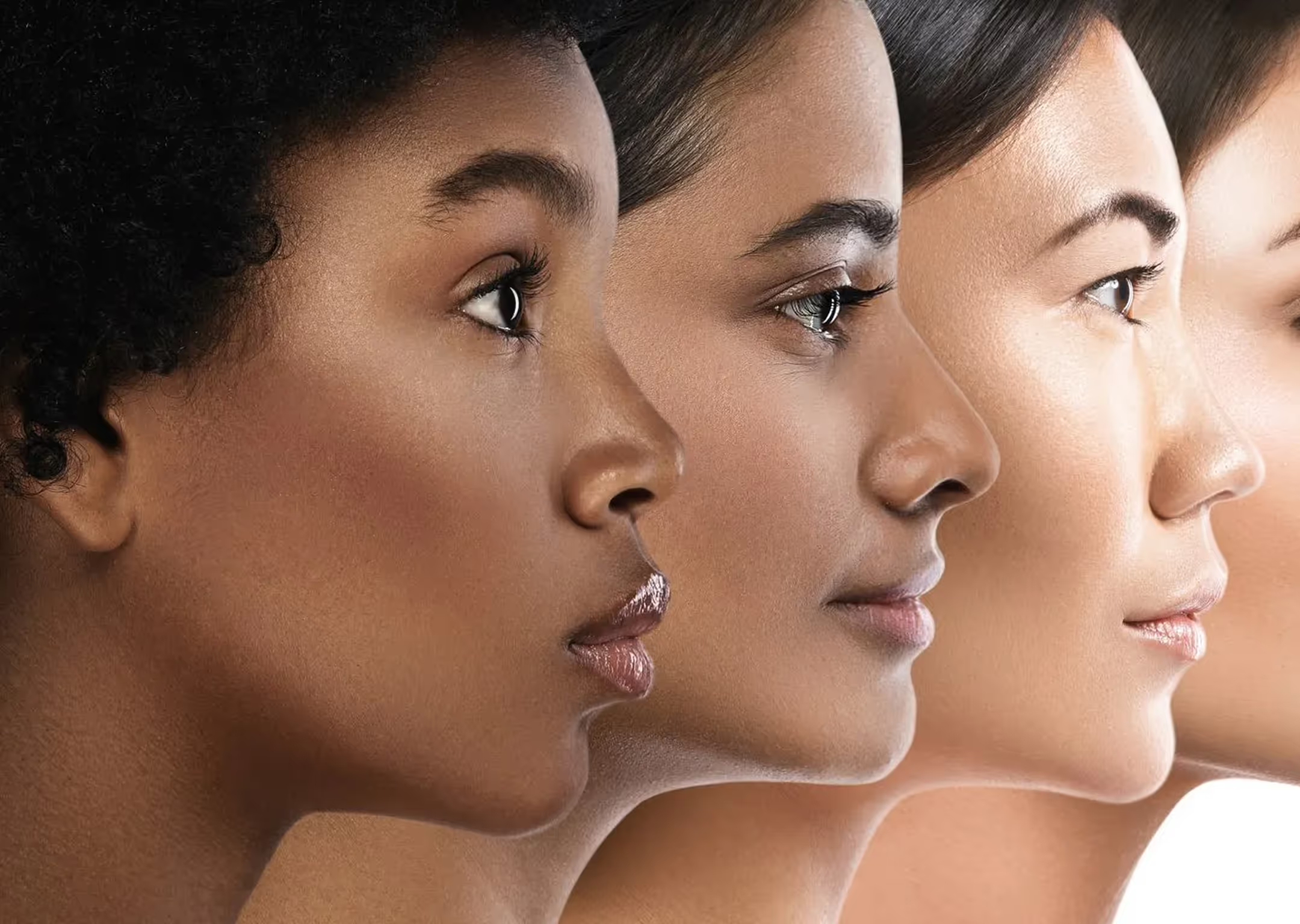
Among different ethnic and racial groups, there are distinct physiological features that characterize the skin and therefore necessitate a distinct acne scar treatment plan. Dr. Hazany is an expert in acne scar treatment for skin of color in Los Angeles and Beverly Hills, including Asian skin, Black skin, and Hispanic skin. While he recognizes the uniqueness among ethnic and racial groups, he also acknowledges that each individual’s skin physiology does not necessarily adhere to general group differences. Dr. Hazany champions that not only is each person’s skin unique but that each scar is unique. With Dr. Hazany, your skin and scars' uniqueness will be respected and thoroughly considered in crafting you a bespoke acne scar treatment plan.
Treating Asian Skin
Treatment for acne scars on Asian skin has its unique challenges. Asian skin is particularly prone to post-inflammatory hyperpigmentation (PIH). Therefore, it is important to pretreat Asian skin with bleaching or lightening cream to reduce and prevent PIH. Dr. Hazany uses a special pharmacy that creates custom lightening creams that contain the necessary vitamins and nutrients to prevent PIH and prepare your skin for optimal acne scar treatment results.
Treating Black Skin
Dr. Hazany completed an intensive plastic surgery internship at Morehouse School of Medicine at various locations throughout the Atlanta area, where the primary patient demographic is Black or of African descent. There, Dr. Hazany honed his skills and understanding of dermatologic treatment for Black skin.
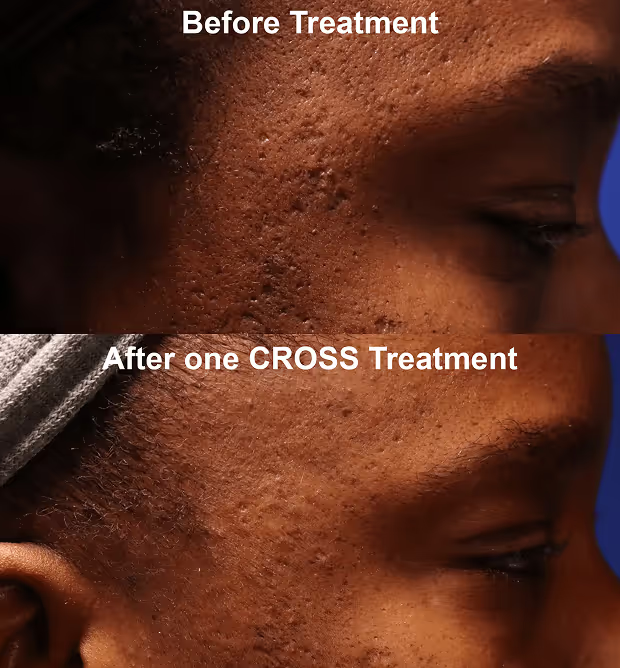
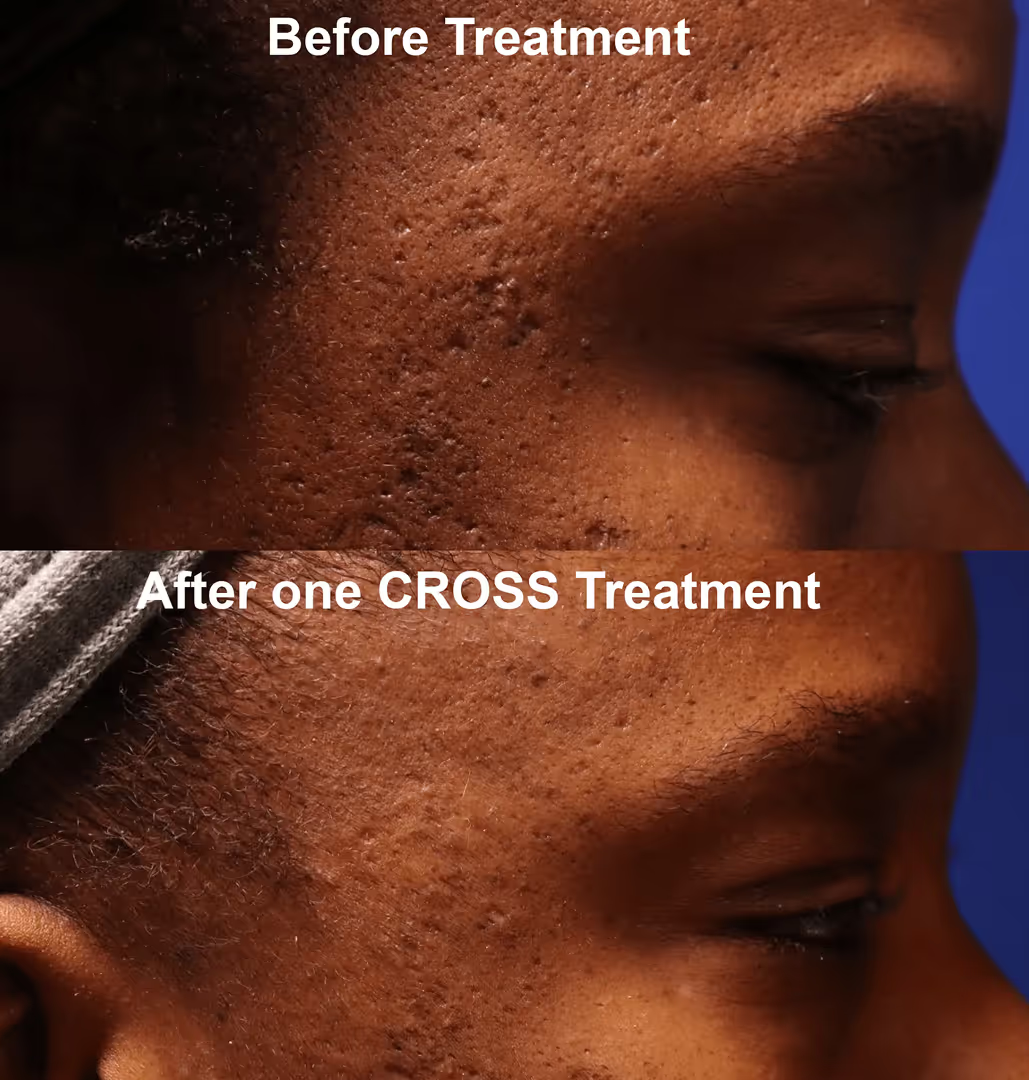
Treatment for acne scars on Black skin or for people of African descent presents unique challenges. People with darker skin tones who are of African descent are prone to post-inflammatory hyperpigmentation (PIH). Also, Black skin is particularly prone to the development of keloid scars.
Dr. Hazany accounts for PIH in his acne scar treatment for Black patients by prescribing a custom compounded bleaching or lightening cream to ensure against PIH after subcision, chemical peel, and other treatments for acne scarring. He uses a special pharmacyto create custom lightening creams that contain the necessary vitamins and nutrients to prevent PIH and prepare your skin for the best acne scar treatment results. Additionally, Dr. Hazany has a thorough understanding of keloid scar development and treatment to ensure against scar overgrowth during the healing process for your acne scar treatment.
Treating Hispanic & Latino Skin
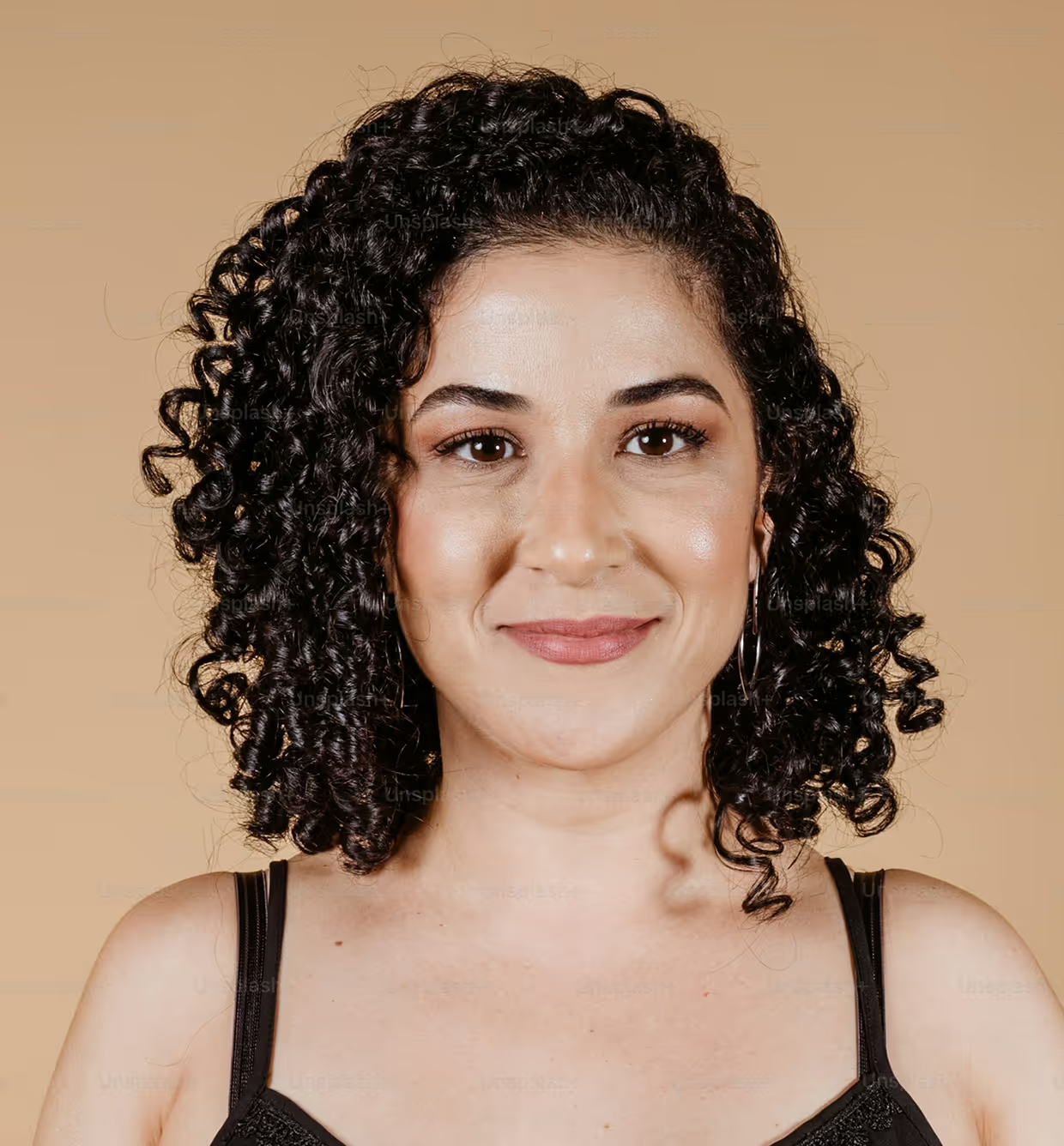
Treatment for acne scars on Latino or Hispanic skin presents unique challenges. For people with darker skin who are of Latino, Hispanic, or Indigneous descent are particularly prone to post-inflammatory hyperpigmentation (PIH). Dr. Hazany accounts for PIH in his acne scar treatment for Latino patients by prescribing a custom compounded lightening cream which prevents PIH after subcision and chemical peel treatments for acne scarring. We use a special pharmacy to create custom lightening creams that contain the necessary vitamins and nutrients to prevent PIH and prepare your skin for the best acne scar treatment results.
Frequently Asked Questions
Specialized acne scar treatment for diverse skin types addressing unique challenges and optimizing outcomes.
Why do darker skin types scar differently from acne?
Darker skin types have unique scarring characteristics due to greater melanin content and different inflammatory responses. Darker skin types are significantly more prone to hypertrophic and keloid scarring compared to fair skin. This increased scarring tendency means smaller acne lesions can produce more noticeable scars. Darker skin also experiences postinflammatory hyperpigmentation more readily, creating additional discoloration beyond true scarring. The inflammatory response in darker skin often extends deeper, causing more significant collagen disruption. Atrophic (depressed) scarring occurs in darker skin but is often less visible against darker skin tone. However, when present, depressed scars stand out more due to the shadow effect on darker backgrounds. Understanding these differences is crucial for appropriate treatment planning. Dr. Hazany has extensive experience treating diverse skin types and understands these nuances. A specialized approach to acne prevention and treatment in darker skin helps minimize scarring risk.
What treatment approaches work best for acne scars in darker skin?
Treatment approaches for darker skin must be carefully selected to minimize complications while maximizing improvement. Subcision works well for depressed scars and carries minimal risk of pigmentation issues. Certain laser wavelengths, particularly erbium and longer wavelength CO2 lasers, work better on darker skin than shorter wavelengths. Fractional approaches are preferred over full-field treatment to reduce complications. Chemical peels require careful concentration selection for darker skin; weaker formulations are often safer. Microneedling can be effective for darker skin with appropriate post-treatment care. TCA CROSS works on darker skin but requires expert application. Dermal fillers are safe for darker skin and useful during healing periods. Sun protection is absolutely critical during healing to prevent postinflammatory hyperpigmentation. Dr. Hazany and the team at Hazany Derm are experienced in treating diverse skin types. Specialized knowledge of what works best for individual skin tones optimizes results.
What is postinflammatory hyperpigmentation and how is it treated?
Postinflammatory hyperpigmentation (PIH) is darkening of skin that occurs after inflammation, particularly common in darker skin types. PIH results from increased melanin production in response to inflammation from acne or acne treatment. PIH appears as dark spots or patches but involves no loss of skin structure like true scarring. PIH often improves with time—even 6-12 months of sun protection can reduce PIH significantly. Skin-lightening products containing hydroquinone or retinoids can accelerate PIH improvement. Chemical peels with appropriate concentration can treat PIH. Laser treatments targeting melanin can improve PIH without affecting normal skin. Early intervention to treat acne aggressively prevents severe inflammation that causes PIH. Sun protection is critical—UV exposure worsens PIH. Dr. Hazany discusses PIH treatment options and prevention strategies. In darker skin, preventing PIH is as important as treating true scarring.
How can I prevent acne scarring if I have darker skin?
Prevention of acne scarring in darker skin is critically important given increased scarring tendency. Early, aggressive acne treatment prevents severe inflammation that causes scarring. Topical retinoids reduce acne and prevent hyperinflammation. Avoiding acne manipulation (squeezing, picking) is absolutely essential—dark skin keloids and hypertrophic scars from manipulation are common. Sun protection prevents postinflammatory hyperpigmentation. Regular dermatology follow-up ensures acne doesn't progress to scarring forms. Oral antibiotics or other systemic treatment is appropriate for inflammatory acne in darker skin. Hormonal treatment helps hormonal acne. For severe acne, isotretinoin may be appropriate. Early consultation with a dermatologist experienced in darker skin is valuable. Dr. Hazany emphasizes prevention—treating acne early prevents the severe scarring that's harder to treat. This preventive approach is especially important for darker skin types.
What is keloid scarring and why are darker skin types more prone to it?
Keloid scarring is excessive scar tissue growth that extends beyond the original wound boundaries. Keloids are firm, raised scars that grow over time. Darker skin types, particularly people of African descent, are significantly more prone to keloid formation. The genetic predisposition for keloid scarring is stronger in darker skin. Any skin injury, including acne, can trigger keloid formation in susceptible individuals. Keloids can appear months or years after the initial injury. They're cosmetically disfiguring and can be uncomfortable. Treatment options include steroid injections, laser treatment, surgical excision, and specialized techniques. Prevention through avoiding trauma and gentle acne treatment is important. Not all people with darker skin develop keloids—individual susceptibility varies. Dr. Hazany carefully manages at-risk patients to minimize keloid risk. Early intervention if keloid formation begins can prevent progression.
Are there specific dermatologists trained in treating skin of color?
Yes, some dermatologists specialize in treating skin of color and understand unique challenges and treatment approaches. Specialized training in skin of color dermatology addresses specific conditions, treatment modifications, and complications common in darker skin. Dermatologists experienced with diverse skin types understand which treatments and techniques work best for specific skin tones. Board-certified dermatologists with diverse patient populations develop expertise treating various skin types. Dr. Salar Hazany has extensive experience treating patients of all skin types throughout his career. The experts at Hazany Derm understand the unique needs of patients with darker skin. Seeking a dermatologist experienced with your skin type helps ensure appropriate, optimized care. Experience treating diverse skin tones translates to better outcomes and fewer complications. Choosing an experienced provider is particularly important when seeking acne scar treatment on darker skin.
What should I look for in choosing a dermatologist for scar treatment?
When choosing a dermatologist for acne scar treatment, look for board certification and experience treating your specific skin type. Ask about the dermatologist's experience treating scars in patients with similar skin tone. Request before-and-after photos showing results on diverse skin types. Ask about complication rates and how complications are managed. Choose someone who listens to your concerns and explains treatment options thoroughly. Experience with multiple treatment modalities (laser, subcision, TCA CROSS, fillers) is valuable. A dermatologist who emphasizes prevention and early intervention shows excellent patient care approach. Ask about their training and continuing education in skin color dermatology. Dr. Hazany's extensive experience, diverse patient population, and commitment to optimized outcomes make him an excellent choice. Finding the right dermatologist is crucial for the best results.